When you purchase a home, you might hear a little market lingo you're not acquainted with. We have actually created an easy-to-understand directory of the most common home mortgage terms. Part of each monthly mortgage payment will go toward paying interest to your loan provider, while another part approaches paying for your loan balance (also referred to as your loan's principal).
During the earlier years, a greater part of your payment goes towards interest. As time goes on, more of your payment goes toward paying for the balance of your loan. The down payment is the cash you pay in advance to purchase a house. In many cases, you need to put cash to get a home mortgage.
For example, conventional loans require as little as 3% down, but you'll have to pay a regular monthly cost (understood as private mortgage insurance) to make up for the small deposit. On the other hand, if you put 20% down, you 'd likely get a better rate of interest, and you would not have to spend for private mortgage insurance coverage.
Part of owning a home is paying for real estate tax and homeowners insurance. To make it easy for you, lending institutions set up an escrow account to pay these expenses. how do adjustable rate mortgages work. Your escrow account is handled by your lending institution and operates kind of like a bank account. Nobody earns interest on the funds held there, however the account is utilized to gather cash so your loan provider can send out payments for your taxes and insurance in your place.
Not all home mortgages feature an escrow account. If your loan does not have one, you have to pay your real estate tax and homeowners insurance coverage bills yourself. However, the majority of loan providers provide this alternative because it allows them to make sure the residential or commercial property tax and insurance expenses get paid. If your down payment is less than 20%, an escrow account is required.
The Single Strategy To Use For How Do Mortgages Work In Canada
Bear in mind that the amount of cash you need in your escrow account is reliant on how much your insurance and property taxes are each year. And considering that these costs may change year to year, your escrow payment will change, too. That suggests your regular monthly home loan payment may increase or decrease.
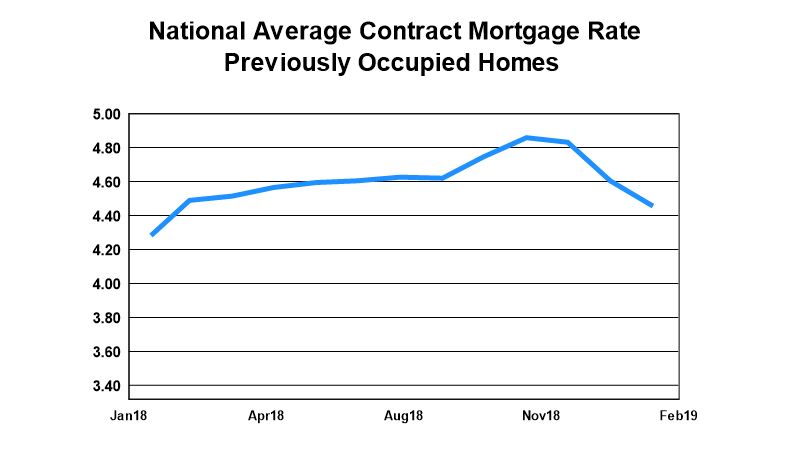
There are 2 kinds of home loan rates of interest: repaired rates and adjustable rates. Repaired rates of interest stay the very same for the whole length of your home mortgage. If you have a 30-year fixed-rate loan with a 4% rates of interest, you'll pay 4% interest till you settle or refinance your loan.
Adjustable rates are rate of interest that alter based upon the market. Most adjustable rate mortgages begin with a set rates of interest duration, which normally lasts 5, 7 or 10 years. Throughout this time, your rate of interest remains the very same. After your set rate of interest duration ends, your rate of interest changes up or down once each year, according to the marketplace.
ARMs are right for some customers. If you plan to move or re-finance before completion of your fixed-rate duration, an adjustable rate home loan can offer you access to lower rates of interest than you 'd generally discover with a fixed-rate loan. The loan servicer is the company that's in charge of providing regular monthly home loan declarations, processing payments, handling your escrow account and reacting to your queries.
Lenders may sell the servicing rights of your loan and you may not get to choose who services your loan. There are many kinds of home loan. Each includes various requirements, interest rates and advantages. Here are some of the most typical types you may hear about when you're applying for a mortgage - how do arm mortgages work.
Fascination About Reverse Mortgages How Do They sirius google finance Work
You can get an FHA loan with a deposit as low as 3.5% and a credit rating of simply 580. These loans are backed by the Federal Real Estate Administration; this suggests the FHA will repay lenders if you default on your loan. This minimizes the danger loan providers are handling by providing you the cash; this means lending institutions can use these loans to customers with lower credit ratings and smaller sized down payments.

Conventional loans are often likewise "conforming loans," which means they satisfy a set of requirements specified by Fannie Mae and Freddie Mac two government-sponsored business that purchase loans from lending institutions so they can offer home mortgages to more people - how do mortgages work in canada. Traditional loans are a popular option for buyers. You can get a standard loan with as little as 3% down.
This contributes to your month-to-month costs but permits you to get into a brand-new home earlier. USDA loans are only for homes in qualified rural areas (although numerous houses in the residential areas certify as "rural" according to the USDA's meaning.). To get a USDA loan, your home income can't surpass 115% of the location mean earnings.
For some, the assurance costs required by the USDA program cost less than the FHA home loan insurance coverage premium. VA loans are for active-duty military members and veterans. Backed by the Department of Veterans Affairs, VA loans are an advantage of service for those who have actually served our nation. VA loans are a terrific option since they let you purchase a home with 0% down and no private mortgage insurance coverage.
Each monthly payment has 4 significant parts: principal, interest, taxes and insurance coverage. Your loan principal is the quantity of cash you have actually left to pay on the loan. For instance, if you borrow $200,000 to buy a house and you pay off $10,000, your principal is $190,000. Part of your month-to-month home loan payment will immediately go toward paying down your principal.
How Do Construction Mortgages Work - Questions
The interest you pay every month is based upon your interest rate and loan principal. The money you pay for interest goes directly to your mortgage supplier. As your loan develops, you pay less in interest as your principal reductions. If your loan has an escrow account, your month-to-month mortgage payment may likewise include payments for home taxes and house owners insurance.
Then, when your taxes or insurance coverage premiums are due, your lending institution will pay those expenses for you. Your home loan term describes how long you'll pay on your mortgage. The two most common terms are 30 years and 15 years. A longer term normally indicates lower monthly payments. A much shorter term generally https://www.facebook.com/wesleyfinancialgroup suggests bigger regular monthly payments however huge interest cost savings.
In the majority of cases, you'll need to pay PMI if your deposit is less than 20%. The expense of PMI can be contributed to your month-to-month home mortgage payment, covered by means of a one-time in advance payment at closing or a mix of both. There's likewise a lender-paid PMI, in which you pay a slightly greater rates of interest on the home loan rather of paying the monthly cost.
It is the written promise or agreement to pay back the loan using the agreed-upon terms. These terms include: Rates of interest type (adjustable or repaired) Interest rate percentage Quantity of time to pay back the loan (loan term) Quantity obtained to be paid back completely Once the loan is paid in complete, the promissory note is returned to the customer.